Across the vast expanses of Eastern Europe, numerous telecom base stations and industrial edge nodes are deployed in remote, hard-to-reach, or severe winter environments. For network operators and system integrators, the highest operational expenditure (OPEX) consistently stems from physical on-site maintenance (truck rolls)—especially when sporadic power faults or parameter anomalies force technicians to drive long distances through adverse weather just to perform basic troubleshooting.
To fundamentally minimize reliance on physical site interventions, deploying 2U modular telecom power systems equipped with advanced digital controllers, noise-immune CAN bus architecture, and robust remote management capabilities has become an industry consensus for site upgrades in Eastern Europe.
Operational and Management Bottlenecks in Remote Eastern European Sites
1. High Servicing Costs and Geographic Isolation
Telecommunication sites across parts of Eastern Europe are geographically dispersed. Legacy power systems lack deep remote telemetry, leaving network operations centers (NOC) with ambiguous "power failure" alarms. Without pre-dispatch diagnostic data, teams cannot determine whether a fault stems from a single rectifier module, an input voltage sag, or a battery circuit issue, leading to inefficient, blind dispatches.
2. Communication Disruption Risks in High-EMI Environments
Industrial facilities or high-voltage transmission lines near remote sites can generate severe electromagnetic interference (EMI). Standard serial communication buses are highly prone to packet loss and lock-ups over long runs or in high-EMI environments, cutting off network management access and forcing manual on-site hard resets.
Core Technical Architecture for Smart Control and Remote Telemetry
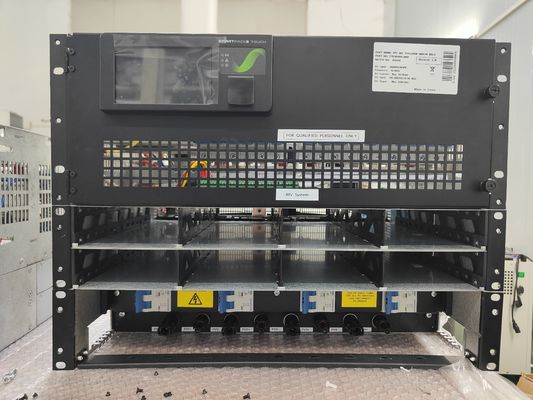
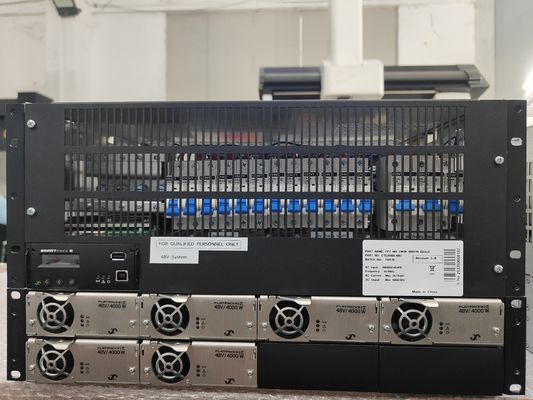
To guarantee absolute reliability in unattended remote locations across Eastern Europe, embedded power systems such as the Eltek 2U platform integrate rigorous control-layer engineering:
1. SmartPack2 Digital Control Core
-
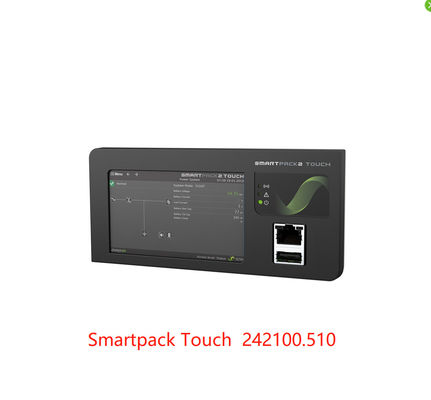
Integrated Local and Remote Interface: Driven by the SmartPack2 digital controller (available in Basic, Master, or Touch editions), featuring an intuitive LCD screen and local keypad for on-site configuration and immediate status reads.
-
Granular Telemetry: The controller samples operating parameters across rectifier slots (Pos 1 through Pos 4)—including output voltage, load current, and battery health—at millisecond intervals, eliminating operational blind spots.
2. Noise-Resilient Multi-Drop CAN Bus Architecture
-
Robust Fieldbus Integrity: Internal data communication between rectifiers, controllers, and I/O expansion units relies on industrial-grade CAN Bus topology (CAN1/CAN2/CAN3).
-
Terminated Bus Protection: Dedicated end-of-line termination resistors are installed across the CAN bus lines to suppress signal reflections and attenuation over extended wiring runs, guaranteeing zero packet loss in high EMI environments.
3. Comprehensive Remote Management and Flexible Alarm Relays
-
Ethernet and Web/SNMP Integration: Embedded network ports support native web server interfaces and standard SNMP protocols, allowing seamless integration into existing operator Network Management Systems (NMS) for remote login, firmware updates, and configuration backups.
-
Hardware-Level Dry-Contact Relays: Equipped with programmable alarm outputs (Alarm Outputs 1-6 supporting NO/NC states) and configurable digital inputs, ensuring critical infrastructure alerts are triggered through underlying auxiliary monitoring systems even during complete IP network link failures.
Selection and Configuration Recommendations for Remote Power Systems
When specifying power solutions for network deployments in Eastern Europe and comparable remote regions, system integrators should verify the following guidelines:
-
Validate NMS Protocol Compatibility: Ensure that the SmartPack2 controller fully supports standard SNMP traps so that the NOC receives precise, categorized fault codes immediately upon an anomaly.
-
Strictly Enforce Bus Termination Standards: During cabinet wiring integration, mandate the correct physical installation of CAN bus termination resistors. This eliminates communication dropouts caused by electromagnetic noise at the physical layer, minimizing unnecessary field service dispatches.


 ¡Su mensaje debe tener entre 20 y 3.000 caracteres!